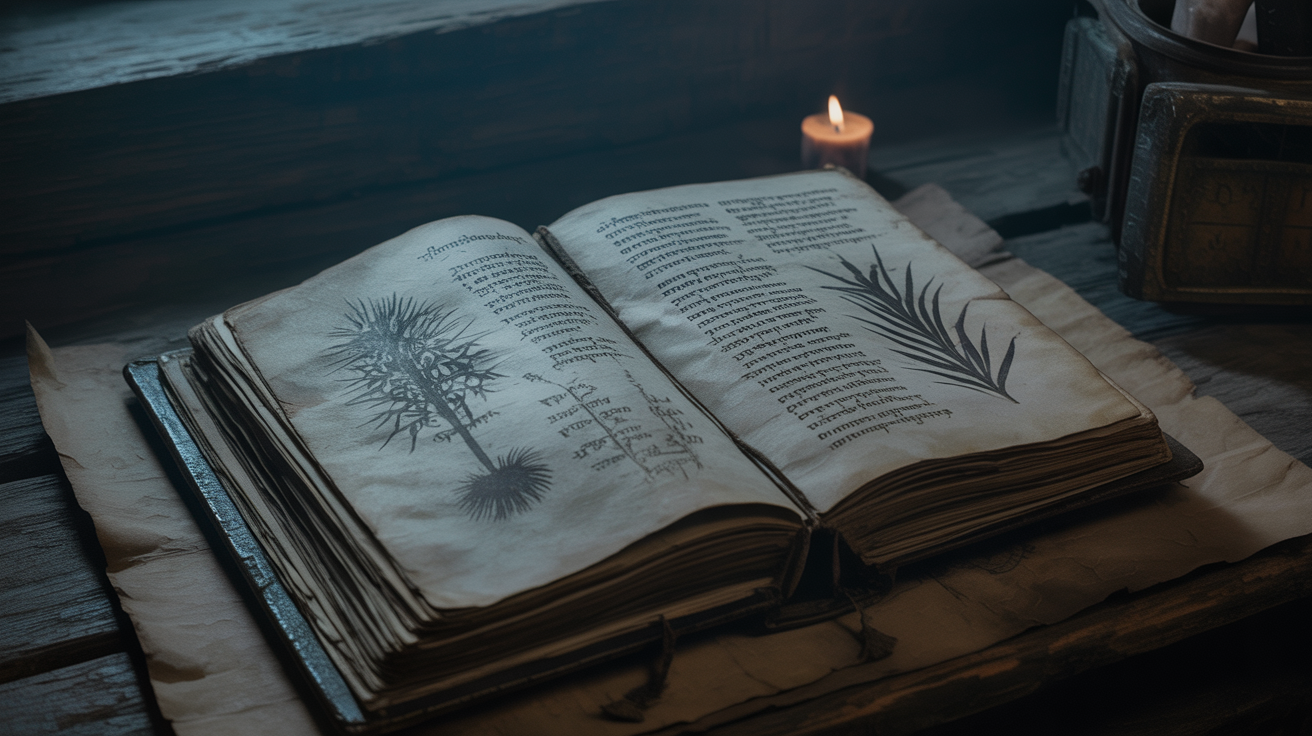
The Voynich Manuscript: An Unbreakable Medieval Code
The World's Most Mysterious Book
In the depths of Yale University's Beinecke Rare Book Library sits one of history's most perplexing artifacts: the Voynich Manuscript. Named after rare book dealer Wilfrid Voynich who acquired it in 1912, this 240-page vellum codex has defied every attempt at translation for over a century. During my years at the Agency, I encountered countless encrypted communications, but nothing compares to the enigma of this medieval document.
The manuscript is written in an unknown script, featuring approximately 170,000 characters in what appears to be an organized language with consistent patterns and structure. Yet despite analysis by the world's foremost cryptographers—including codebreakers from both World Wars—the text remains impenetrable. Carbon dating places its creation between 1404 and 1438, but the identity of its author remains unknown.
Bizarre Illustrations and Impossible Botany
What makes the Voynich Manuscript particularly unsettling are its illustrations. The pages are filled with drawings of plants that don't exist in any known botanical record, astronomical diagrams featuring unfamiliar celestial configurations, and strange biological illustrations depicting nude figures in interconnected pools of green liquid. The pharmaceutical section shows roots and herbs, yet none match any documented species.
I've applied pattern recognition techniques I developed tracking terrorist networks to analyze the manuscript's structure. The text exhibits statistical properties consistent with natural language—it's not random gibberish. Word frequency distributions follow Zipf's law, suggesting genuine linguistic content. Yet every decryption method fails.
Theories and Dead Ends
Over the decades, theories have ranged from the plausible to the extraordinary. Some scholars believe it's an elaborate hoax, though the time and expense required to create such a detailed forgery in the 15th century seems impractical. Others suggest it's an encoded alchemical or herbal text, its secrets deliberately obscured to protect dangerous knowledge.
More exotic theories propose the manuscript originated from a lost civilization, or even extraterrestrial sources. The consistent internal logic of the script, combined with its complete resistance to decryption, has led some researchers to consider whether it represents knowledge from a culture entirely separate from known human history.
Modern Analysis Yields New Questions
Recent computational analysis using artificial intelligence has identified patterns suggesting the text may be written in a constructed language with multiple layers of encryption. Some researchers claim to have identified word structures similar to Semitic languages, while others see connections to Asian scripts. Each new discovery seems to deepen the mystery rather than solve it.
The Voynich Manuscript represents the ultimate intelligence failure—a document that refuses to yield its secrets despite centuries of investigation. In my experience, when something resists every conventional method of analysis, it's usually because we're asking the wrong questions. Perhaps the manuscript isn't meant to be read in the way we understand reading. Perhaps it's a key to something else entirely, waiting for the right mind to unlock its purpose.
📜 Video: The Voynich Manuscript An
A Knight Phenomena Investigation