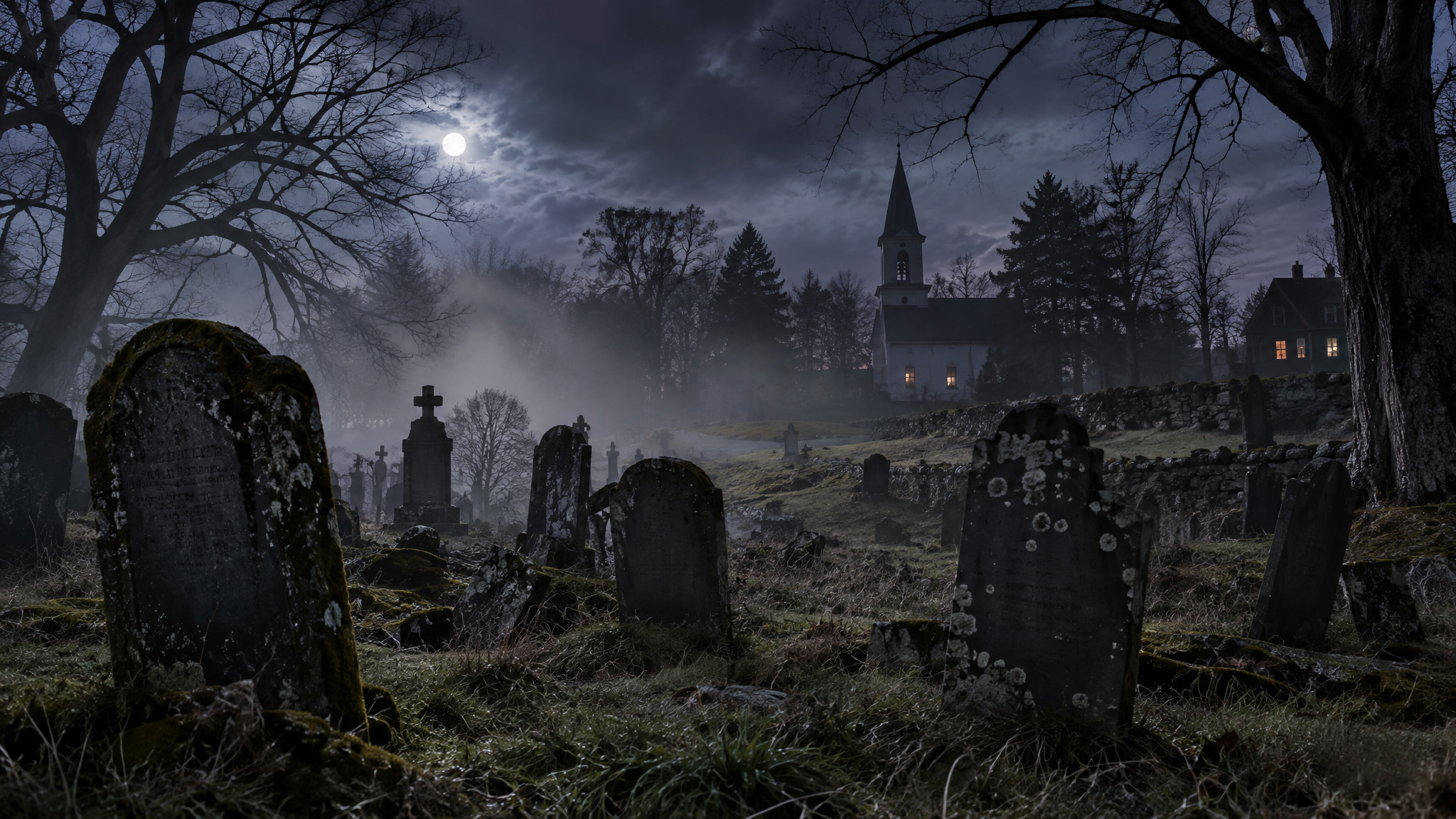
The Lead Coffins of New England: When a 19th-Century Burial Became a Modern Mystery
A mystery that begins with a burial, not a haunting
Most paranormal stories begin with a sighting, a sound, or a photograph that refuses to settle down. This one begins with an object: a coffin. In parts of New England, especially in the nineteenth century, some burials involved lead-lined or metal-enclosed coffins designed to slow decomposition, preserve remains, and protect family privacy. Over time, those sealed containers acquired a second life in local lore. Once a grave is opened decades later and the metal shell is found intact, people naturally ask whether something unusual was hidden inside.
That question is understandable. A sealed coffin looks deliberate, almost ceremonial. In the documentary record, though, the explanation often sits in plain view: wealth, sanitation concerns, transportation over distance, and the era’s practical obsession with preservation. The mystery does not vanish when these facts are introduced, but it changes shape. What once sounded like occult concealment becomes a study in nineteenth-century burial custom, material technology, and the way communities retrofit old facts into modern legends.
This post is not about proving or disproving ghosts. It is about how an ordinary funerary practice can become a mystery when the original context is lost. The lead coffin, in other words, is less a paranormal artifact than a case study in historical amnesia.
Why lead-lined coffins existed at all
Lead was not chosen because it was strange; it was chosen because it worked. In an age before modern embalming became routine, families with means sometimes wanted stronger protection against odor, leakage, and premature decomposition. Metal-lined coffins also helped when bodies had to be moved long distances by rail or carriage. Preservation was not a side issue. It was central to Victorian burial culture, which placed enormous value on dignity, display, and control over the appearance of death.
There was also a social dimension. A sealed coffin could protect the dead from disturbance and shield the living from unpleasant realities. In some cases, the lead lining helped preserve a body for viewing before burial. In others, it served a more bureaucratic purpose: preventing leakage during transit and satisfying cemetery regulations or municipal health rules. These were practical choices, not necessarily mysterious ones.
The lead itself was often enclosed within a wooden exterior, so what families saw at the funeral was still a conventional coffin. The metal layer was hidden unless the burial was later disturbed. That matters because a hidden structure invites later interpretation. If a person in 1880 never mentioned the lead lining to neighbors, then a grave opened in 1950 may appear to reveal a secret, when in fact it only reveals forgotten craftsmanship.
What the records usually show
When investigators approach a coffin mystery properly, they start with the boring sources: death certificates, probate files, cemetery records, newspaper notices, church registers, and—when available—undertaker ledgers. These documents rarely contain dramatic language, but they answer the important questions. Who paid for the burial? Was the deceased moved from another town? Was there a disease concern? Did the family belong to a social class that could afford elaborate funerary goods?
In documented cases of metal-lined coffins, the answers tend to cluster around a few themes. A person may have died away from home, and the body was shipped back with extra protection. A family may have wanted a public viewing without the practical consequences of delayed interment. A wealthy household may have purchased a premium coffin from a regional undertaker. Sometimes, the presence of a lead lining is simply a marker of status, no more occult than silverware or a family crest.
There is a tendency in paranormal reporting to treat absence of explanation as evidence of concealment. That is poor method. If a local story claims a coffin was “sealed for a reason,” the correct response is not to leap to supernatural possibilities. It is to ask whether the reason was commercial, medical, or cultural. In most cases, the trail points to one of those, not to the extraordinary.
How a burial custom turns into a legend
Legends often start where context ends. A grave is opened for a road project, a new foundation, or cemetery restoration. Workers find a heavy, sealed container. Someone remarks that the coffin is unusual. Another person wonders why it was not meant to be opened. By the time the story reaches a newspaper, the practical detail has been stripped away and replaced with implication.
That process is especially strong in communities with older burial grounds. Local memory preserves the fact that “something odd” was buried there, but not the paperwork that explained it. Families die out. Cemetery caretakers change. Municipal records are scattered or discarded. A sealed coffin becomes a blank surface onto which later generations project everything from aristocratic secrecy to occult ritual.
There is also a psychological element. We expect graves to contain simple wood, cloth, and bone. When we encounter engineered materials inside a burial, the mind interprets them as defensive. Defensive against what? Decay. Odor. Humidity. Transportation. Yet once a story has entered folklore, the answer is often recast as something more theatrical. A practical seal becomes a lock. A lock implies a secret. And a secret implies a mystery.
What forensic science can and cannot tell us
Modern forensic and archaeological methods can identify the materials used in a coffin, detect evidence of embalming, and estimate whether a burial was re-entered. They can also distinguish between a standard wooden coffin with decorative metal fittings and a fully metal-lined container. That distinction matters, because many popular stories blur the difference.
However, science has limits when the coffin’s contents have already been disturbed or the documentary record is thin. Lead corrodes in particular ways, but corrosion does not explain motive. A sealed burial chamber may show signs of careful construction, but careful construction does not equal mystery. The evidence can tell us what was built and how it aged. It cannot tell us whether a family feared contamination, wanted privacy, or simply purchased the best available coffin from a local supplier.
In that sense, the lead coffin is a good example of the investigator’s discipline. The physical object may be real, but the story surrounding it must still earn its credibility. If a claim rests on the phrase “they never said why,” that is not a conclusion. It is an opening for research.
The temptation to read secrecy into death
Death invites secrecy because it removes the subject from the room. The dead do not explain themselves, and the living often do not preserve their motives with precision. That vacuum can attract speculative narratives. A sealed coffin may be presented as evidence that a family was hiding disease, scandal, or even something nonhuman. But before any such claim is entertained, the simpler possibilities must be exhausted.
For nineteenth-century burials, the simplest explanations are often sufficient. Tuberculosis, influenza, and other contagious illnesses shaped how families handled remains. Travel between towns and states made transport precautions worthwhile. Families with money adopted elaborate funeral practices to signal respectability. Undertakers, like any other tradesmen, sold products that balanced appearance with preservation. None of this requires the extraordinary.
Still, the mystery survives because the object survives. A coffin that looks engineered for secrecy will always feel different from a plain pine box. People do not need to believe in ghosts to find that unsettling. They only need to confront the mismatch between what a grave is supposed to represent and what the evidence inside suggests.
What careful investigation looks like
If one wanted to investigate a specific lead-lined coffin case properly, the sequence would be straightforward. First, locate the burial record and identify the deceased. Second, review probate and census material to determine social standing and likely funeral expense. Third, identify the undertaker and coffin supplier, if possible, through advertisements or municipal directories. Fourth, check whether the death involved disease, relocation, or a post-mortem transport issue. Fifth, compare the coffin’s construction with known nineteenth-century funeral hardware in the same region.
That process sounds dry because it is. Yet it is also the only way to separate pattern from projection. A true anomaly should withstand that pressure. Most of the time, the result is not sensational, but it is informative. We learn how people once managed death, which is itself a revealing part of history. Rituals around burial often tell us as much about the living as the dead.
And if a case remains partly unresolved after all that work? Then the mystery becomes intellectual rather than paranormal. We can say, with discipline, that the available evidence explains much but not everything. That is a legitimate stopping point. It is also the point where better questions begin.
Why these stories endure
Lead coffins endure in folklore because they occupy a rare space between fact and ambiguity. The object is real. The burial is real. The unusual construction is real. What changes over time is the narrative attached to it. In the absence of context, people prefer meaning, even if the meaning is invented after the fact.
That does not make the story trivial. Quite the opposite. It shows how easily a normal historical artifact can become a vessel for fear, rumor, and wonder. The mystery is not that someone buried a body in a lead-lined coffin. The mystery is that a perfectly explainable object can travel across generations and emerge as something else entirely.
For investigators, that is the lesson. Start with the artifact. Follow the records. Resist the urge to fill silence with drama. In most cases, history provides the answer if we are willing to do the work. And when it doesn’t, the unanswered portion should remain labeled as such: unknown, not supernatural.
That distinction matters. It keeps the inquiry honest.