The Jersey Devil: New Jersey’s Pine Barrens Legend Under the Microscope
In the Pine Barrens, Legends Don’t Die Quietly
In the hierarchy of American mysteries, the Jersey Devil occupies a strange middle ground. It is famous enough to be embedded in state folklore, obscure enough to survive ridicule, and old enough to have accreted layers of rumor that make the original shape of the story hard to pin down. That combination is often where the most durable mysteries live: not in the headline, but in the sediment beneath it.
I have learned to treat legends the way an analyst treats a patchy intelligence report. Start with the source, separate firsthand observation from retelling, and ask what changes when a story crosses county lines, generations, or newspapers looking for circulation. The Jersey Devil is not one story. It is a corridor of stories, stretching from colonial-era folklore to modern roadside encounters in South Jersey, and every era seems to have added its own equipment to the myth.
The creature is typically described as upright, roughly human-sized, with leathery wings, hooves, a forked tail, and a head that is either horse-like, goat-like, or something so anatomically unstable that witnesses can only reach for familiar livestock comparisons. That inconsistency matters. It does not disprove the phenomenon, but it warns us that we are dealing with memory, fear, expectation, and the limitations of nighttime observation.
The Birth of a Monster
The most persistent origin story centers on the Leeds family of colonial New Jersey, particularly “Mother Leeds,” who is said to have given birth to her thirteenth child in 1735 and cursed the infant in frustration, only to watch it transform into a winged beast and flee into the woods. This tale is colorful, theatrical, and almost certainly not a literal account. But folklore rarely survives because it is literal. It survives because it maps social anxieties onto a memorable frame.
There was a real Leeds family in colonial New Jersey, and there was real rivalry in the public sphere surrounding political and religious disputes. Daniel Leeds, and later his descendants, became entangled in controversy that made their name useful as a target. Over time, the “Leeds Devil” may have started as a satirical or political label and hardened into a supernatural accusation. That process is familiar to anyone who has watched rumors evolve in the digital age: a name becomes a shorthand, the shorthand becomes a threat, and the threat eventually acquires a life of its own.
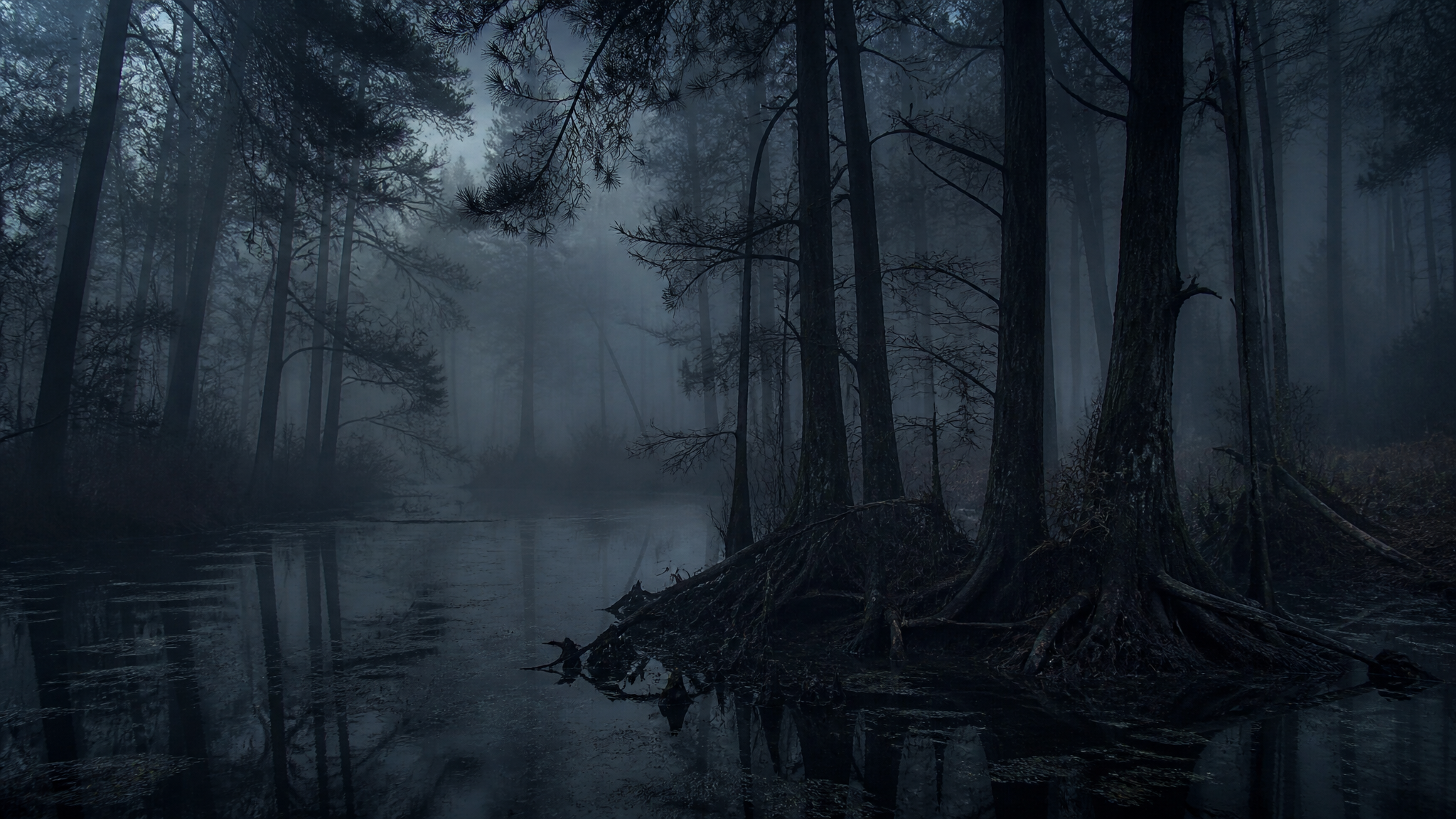
By the nineteenth century, reports of a Jersey Devil were already appearing in local accounts. The Pine Barrens, with its wide tracts of scrub forest, isolated roads, and marshy dead zones, provided a perfect stage. In such terrain, distance distorts shape, tree lines hide movement, and a sound can travel in ways that make an ordinary animal seem extraordinary.
The 1909 Panic: When a Legend Went Mainstream
The year 1909 is the inflection point. That January, New Jersey and neighboring areas were swept by a wave of reports, tracks, and supposed sightings. Newspapers across the region published stories of frightened residents, strange footprints, and alleged encounters with a creature that had escaped the pages of folklore and entered the public imagination as a current event.
Here we see one of the key mechanisms that turns a regional legend into a national mystery: the newspaper feedback loop. Reports generate more reports. A witness reads a description in the paper, then interprets an ambiguous shape through that description. A second witness sees the same headline and becomes primed to notice what might otherwise have been dismissed. Once the Jersey Devil became a media event, it became easier to see one.
Not every report was absurd. Some were sincere, some detailed, and some came from people with little obvious incentive to lie. But sincerity is not the same as accuracy. A frightened farmer hearing something crash through brush at dusk is not inventing from nothing; he is interpreting a real sensory event under poor conditions. That distinction is important. The question is not whether people saw something. The question is what they saw, and how much the surrounding culture shaped the answer.
“The strongest legends are often built from ordinary observations under extraordinary expectations.”
What Did Witnesses Actually Describe?
Across decades of accounts, certain elements recur: a bipedal gait, wings or wing-like appendages, shrill vocalizations, and an unsettling ability to appear and vanish in the scrub. Sometimes the creature is said to leap over fences or move with improbable speed. Occasionally it is reported near roads, barns, or the edges of settlements. Rarely is it described with the kind of anatomical consistency one would expect if a single, identifiable animal species were involved.
That does not end the inquiry. It sharpens it.
Possible explanations include mistaken identity, especially involving large birds such as herons, owls, or cranes observed in low light; escaped livestock or exotic animals; mass suggestion amplified by media; and the deeply human tendency to organize uncertainty into a creature-shaped narrative. New Jersey’s Pine Barrens also contain enough physical oddity to keep the legend alive: strange sounds, limited visibility, and a landscape that can make a branch snap or a shadow move like a presence.
Another possibility is that the Jersey Devil functions as a composite entity. Some sightings may have been genuine misidentifications. Others may have been pranks, folklore reinforcement, or emotional responses to the idea of a thing already presumed to be there. In that sense, the creature may not be one creature at all, but a cultural container into which different events were poured.
The Psychology of Seeing Monsters
People like to imagine that fear invents monsters from scratch. The reality is more nuanced. Fear usually repurposes what is already available. A shape in the dark becomes a silhouette. A sound becomes a warning. A patch of movement becomes an attacker. If a community already has a strong monster template, the brain will gladly use it.
The Pine Barrens are especially good at producing this kind of ambiguity. They are remote without being inaccessible, wild without being uninhabited. That makes them ideal for legend. A place that is entirely empty generates no stories. A place that is occupied, but only partly visible, generates endless ones.
There is also a social function at work. The Jersey Devil acts as a boundary guardian in the folk imagination. It warns children, marks the edges of the known world, and gives a name to the discomfort people feel when entering the woods after dark. In that sense, the legend is less about zoology than geography. It is a story New Jersey tells itself about the price of going too far into the wrong terrain.
Could There Be a Real Animal Behind the Myth?
This is where skepticism and curiosity have to stay in the same room. Most cryptid cases fail because they ask us to choose between “all fake” and “all true.” Real investigations are more annoying than that. They leave room for partial truths.
Could there have been an unknown animal at the root of some early sightings? Unlikely, but not impossible. Large mammals are difficult to overlook in densely populated regions, but the Pine Barrens are not a dense landscape in the same way a city is dense. A rare, misidentified, or escaped animal could leave enough of an impression to seed folklore. Yet no credible biological trail has ever produced a Jersey Devil specimen, carcass, clear track pattern, or sustained ecological evidence.
That absence matters. In the age of cameras, trail sensors, and endless amateur documentation, a real breeding population of a large winged creature would be expected to leave more than rumors. The silence in the physical record is one of the strongest arguments against a literal unknown species.
Still, I would caution against turning the absence of hard evidence into an argument that nothing ever happened. Legends often begin with something small and ordinary: a misread animal, a strange scream, a child’s scare, a local hoax, a reporter hungry for copy. The mystery is not whether the legend is true in its most extravagant form. It is how that extravagance took root.
Hoaxes, Headlines, and the Durability of Belief
Every enduring mystery attracts opportunists. The Jersey Devil is no exception. Over the years, various hoaxes, dubious photographs, and theatrical sightings have periodically revived the legend. That should surprise no one. The moment a mystery becomes famous, someone will try to monetize it, parody it, or weaponize it.
But hoaxes do not fully explain persistence. In fact, they often rely on a preexisting belief structure to land properly. A fake footprint means nothing in a vacuum. It matters because people already think a footprint might matter. The Jersey Devil survives because the legend has enough cultural inertia to absorb fraud without collapsing.
The result is a paradox familiar to investigators: the better known the case, the harder it is to extract the original signal from the noise. By the time a story has traveled through tabloids, folklore, roadside attractions, and family retellings, it becomes less a record than a living ecosystem. Every new sighting feeds the older ones, and every older one legitimizes the next.
What the Jersey Devil Really Tells Us
If I step back from the folklore and look at the evidence with a cold eye, I do not find persuasive proof of a winged monster stalking the Pine Barrens. I find something arguably more interesting: a long-running example of how human beings build monsters out of uncertainty, local history, environmental conditions, and media amplification.
The Jersey Devil is not merely a creature story. It is a case study in rumor persistence. It demonstrates how a name can outlive its origin, how a landscape can reinforce a myth, and how eyewitness testimony, though sincere, can be unstable under stress. It also reminds us that mystery does not require the supernatural to be powerful. Sometimes the supernatural is just the mask a community puts on the unknown.
And yet the legend remains unsettling. That is the final clue. If the story were too neat, it would have died. Instead, it persists because it sits in the unresolved space between report and interpretation, between history and fear. In the Pine Barrens, people still hear things in the dark. Most of the time, those things are animals, wind, machinery, or imagination. But the human mind is a pattern-finding instrument, and once it learns the shape of a devil, it is remarkably willing to see one again.
Final Assessment
My assessment is conservative: the Jersey Devil is almost certainly a folklore organism built from multiple sources, reinforced by suggestible reporting and sustained by a landscape well suited to uncertainty. That does not make it trivial. On the contrary, it makes it one of the more instructive mysteries in American paranormal history.
Because if a legend can endure for centuries without ever producing a specimen, a clear chain of custody, or a definitive disproof that satisfies believers, then the real power of the Jersey Devil may not be in the woods at all. It may be in us.
And that is where the investigation becomes less about the creature and more about the condition that created it: a deep human need to name the thing in the dark before the thing in the dark names us.
😈 Video: The Jersey Devil New
A Knight Phenomena Investigation