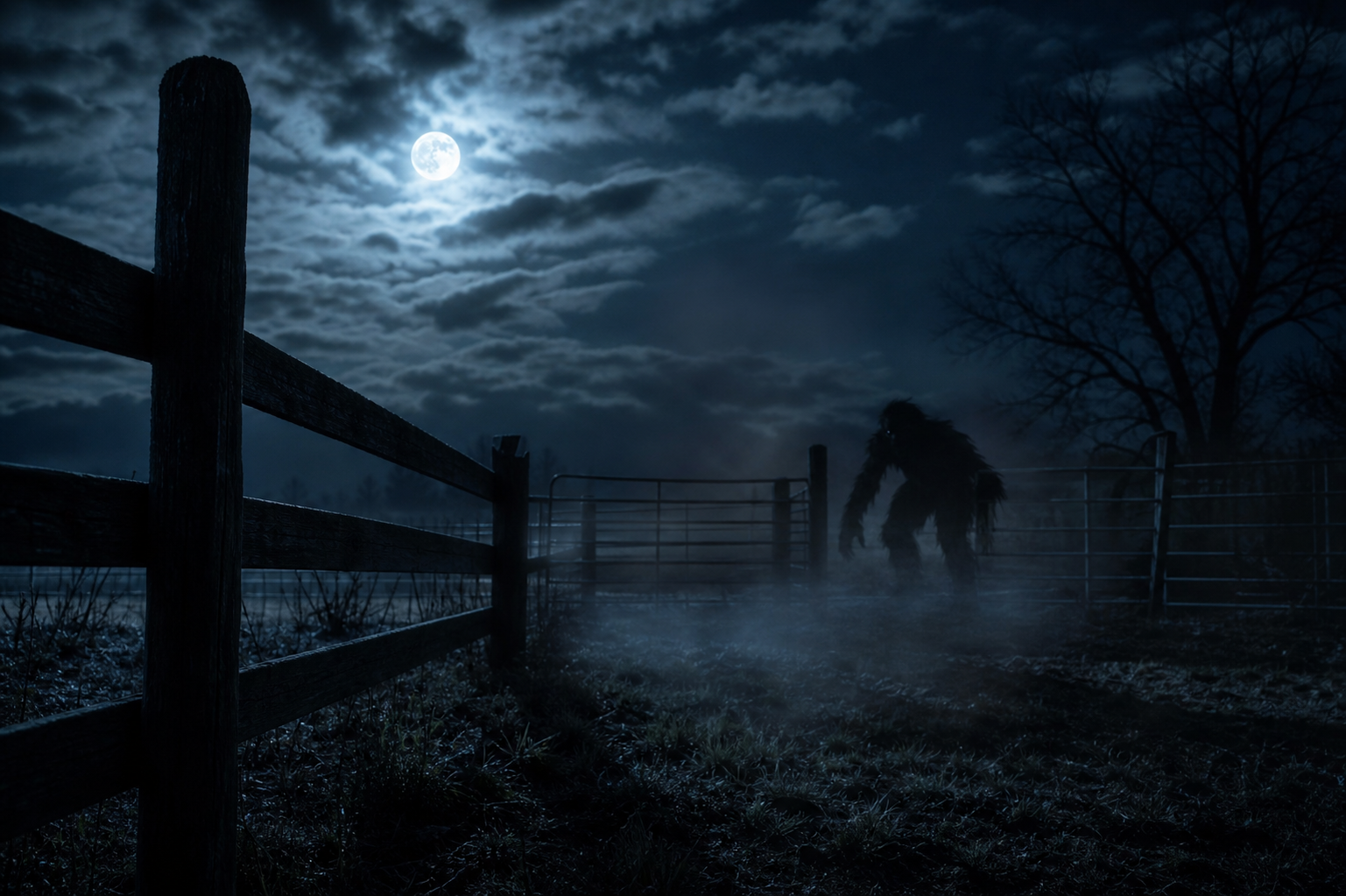
The Chupacabra Phenomenon: Tracking a Modern Monster from Puerto Rico to the Americas
During my years at the Agency, I learned that patterns matter more than individual data points. A single anomalous report means little; a cluster of similar reports across time and geography demands investigation. The chupacabra phenomenon represents one of the most intriguing patterns in modern cryptozoology—not because it's likely to be real, but because it offers a unique window into how contemporary legends are born, spread, and evolve in real-time.
The Moca Vampire: Prelude to a Legend
The story doesn't actually begin in 1995. In March 1975, the town of Moca, Puerto Rico, experienced a series of bizarre livestock deaths. Farmers discovered their animals—chickens, goats, cows—drained of blood through small circular incisions. The local press dubbed the unknown predator "El Vampiro de Moca" (The Vampire of Moca). Panic spread through the agricultural communities. Armed patrols searched the countryside. No culprit was ever identified, and the incidents eventually ceased.
For twenty years, the Moca vampire remained a local curiosity, occasionally referenced in Puerto Rican folklore but largely forgotten. Then, in March 1995, history repeated itself—with a terrifying new dimension.
Patient Zero: The Canóvanas Attacks
The modern chupacabra phenomenon began in the municipality of Canóvanas, Puerto Rico. In early 1995, residents began discovering their livestock dead under mysterious circumstances. Eight sheep were found completely drained of blood, with three small puncture wounds forming a triangular pattern on their chests. No blood pooled on the ground. No signs of struggle. Just desiccated carcasses with those distinctive marks.
What distinguished these incidents from the Moca vampire was the eyewitness testimony. In August 1995, Madelyne Tolentino provided the first detailed description of the creature she claimed to have seen through her window. Her account would define the chupacabra archetype: a bipedal creature approximately three to four feet tall, with large elongated eyes, gray-green skin, spines or quills running down its back, and thin arms with three-fingered claws.
Tolentino's description was remarkably specific and, as researchers would later note, bore a striking resemblance to the alien creature "Sil" from the science fiction film Species, released just months earlier. This correlation raises important questions about the role of popular culture in shaping eyewitness accounts—a phenomenon well-documented in psychological research.
The Contagion Spreads
By late 1995, chupacabra reports had spread across Puerto Rico like wildfire. The pattern was consistent: livestock found dead, apparently drained of blood, with puncture wounds. Eyewitness descriptions varied, but most aligned with Tolentino's template. The creature had acquired its name—"chupacabra" or "goat-sucker"—from comedian and entrepreneur Silverio Pérez during a radio program.
What happened next demonstrates the power of modern media to propagate folklore. By 1996, chupacabra sightings had jumped to Mexico. By 1997, they'd reached Texas and Florida. Soon, reports emerged from Chile, Brazil, and throughout Latin America. Each region added its own variations to the legend, but the core narrative remained: a mysterious predator was killing livestock and draining their blood.
From an analytical perspective, this geographic spread pattern is fascinating. It follows media networks and cultural connections rather than any logical progression a biological predator might take. The chupacabra didn't migrate; the idea of the chupacabra migrated.
The Physical Evidence
Unlike many cryptozoological phenomena, the chupacabra legend generated substantial physical evidence—though not of the type believers hoped for. Numerous carcasses attributed to chupacabras have been recovered and subjected to scientific analysis.
In 2007, a rancher near Cuero, Texas, shot and killed a hairless, dog-like creature that had been attacking her livestock. DNA analysis conducted by Texas State University identified it as a coyote with severe mange. Similar specimens have been recovered in Blanco, Texas (2008), Hood County, Texas (2008), and Kentucky (2010). In every case where DNA analysis was performed, the results were identical: Canis latrans—the common coyote—suffering from sarcoptic mange.
Mange is a parasitic skin disease caused by mites. In severe cases, it causes complete hair loss, thickened gray-blue skin, and a generally alien appearance. Affected animals often appear emaciated and move in unusual ways due to discomfort. To someone unfamiliar with the condition, a mangy coyote genuinely looks like something from another world.
But what about the original Puerto Rican reports, which described a bipedal, reptilian creature rather than a canine? This discrepancy highlights how the chupacabra legend actually represents two distinct phenomena that became conflated under a single name.
Two Chupacabras: The Bifurcation of a Legend
Cryptozoologist Benjamin Radford, who conducted the most thorough investigation of the chupacabra phenomenon, identified this crucial distinction. The original Puerto Rican chupacabra—based on Tolentino's description—was a bipedal, alien-like creature. The mainland American chupacabra is consistently described as a hairless, dog-like quadruped.
These are fundamentally different creatures, yet they share a name and a reputation. This bifurcation reveals how folklore adapts to local contexts. In Puerto Rico, where there are no native canine predators and UFO culture was prominent in the 1990s, the chupacabra took an extraterrestrial form. On the mainland, where coyotes are common and mange-afflicted specimens occasionally appear, the legend adapted to fit available "evidence."
The Blood-Draining Mystery
The most persistent element of chupacabra reports is the claim that victims are drained of blood. This detail appears in accounts from Puerto Rico to Chile, from 1995 to the present day. It's also almost certainly false.
Veterinary examinations of alleged chupacabra victims consistently show normal blood content. What appears to be blood drainage is actually a combination of factors: lividity (blood settling in the lowest parts of a carcass after death), decomposition, and observer expectation. When people expect to find bloodless corpses, they interpret normal post-mortem changes as evidence of blood drainage.
The puncture wounds are more interesting. In many cases, they're consistent with predation by known animals—dogs, coyotes, or in Puerto Rico's case, possibly feral monkeys or large birds. Small puncture wounds can result from canine teeth, and the triangular pattern may simply reflect the spacing of a predator's bite.
In my intelligence work, we had a saying: "People see what they expect to see." Once the chupacabra narrative was established, ordinary predation events were reinterpreted through that lens. A farmer who might have previously attributed livestock deaths to wild dogs now had a more exotic explanation available.
The Psychological Dimension
The chupacabra phenomenon offers valuable insights into mass hysteria and the social construction of reality. The initial Puerto Rican outbreak occurred during a period of economic uncertainty and cultural tension. The island was grappling with its political status, economic challenges, and rapid modernization. Folklore often flourishes in such environments, providing a framework for expressing collective anxiety.
The creature's characteristics are telling. It's alien yet animalistic, technological yet primitive, threatening yet elusive. These contradictions mirror the anxieties of communities caught between traditional rural life and modern globalization. The chupacabra becomes a symbol of forces beyond local control—much like economic policies, environmental changes, or cultural shifts.
Eyewitness testimony, even from sincere observers, is notoriously unreliable. Memory is reconstructive, not reproductive. When Tolentino saw something unusual (possibly a stray dog or monkey), her brain filled in details based on available cultural references—including recent films. Subsequent witnesses, primed by media coverage, experienced similar reconstructive processes.
The Media Amplification Effect
The chupacabra's rise coincided with the expansion of Spanish-language media networks in the Americas. Television programs like "Primer Impacto" and "Ocurrió Así" devoted extensive coverage to the phenomenon, often presenting it uncritically. This created a feedback loop: media coverage generated more reports, which generated more coverage.
The internet accelerated this process. By the late 1990s, chupacabra reports, photos, and videos circulated globally within hours. The barrier between local folklore and international phenomenon had effectively dissolved. A livestock death in rural Nicaragua could become part of the global chupacabra narrative before local authorities even investigated.
This represents something genuinely new in the history of folklore. Traditional legends evolved over generations through oral tradition. The chupacabra evolved in real-time through mass media, creating what folklorist Jan Brunvand might call a "contemporary legend" or "urban legend" despite its rural setting.
The Persistence of Belief
Despite overwhelming evidence that chupacabra sightings involve misidentified known animals, the legend persists. New reports continue to emerge, particularly from rural areas of Latin America and the American Southwest. Why?
Part of the answer lies in the human need for mystery and meaning. A mangy coyote is mundane; a chupacabra is extraordinary. In communities where daily life can be harsh and monotonous, the possibility of genuine mystery provides excitement and a sense that the world contains more than the visible and ordinary.
There's also an element of cultural identity. The chupacabra has become part of Latin American folklore, referenced in music, art, and literature. Defending its possibility becomes, for some, a way of defending cultural autonomy against scientific rationalism perceived as culturally foreign.
Lessons from the Goat-Sucker
What can the chupacabra phenomenon teach us? First, it demonstrates how quickly modern legends can form and spread. In less than a year, the chupacabra went from a local Puerto Rican mystery to a hemisphere-wide phenomenon. This has implications for understanding how misinformation spreads in our interconnected world.
Second, it shows the power of narrative frameworks. Once the chupacabra template was established, it became a lens through which people interpreted ambiguous events. This pattern appears in many contexts, from UFO sightings to conspiracy theories. The framework precedes and shapes the interpretation of evidence.
Third, it reveals the limitations of debunking. Despite clear scientific evidence that alleged chupacabra carcasses are mangy coyotes and that livestock deaths have conventional explanations, belief persists. Facts alone don't dispel legends when those legends serve psychological or cultural functions.
Finally, the chupacabra reminds us that mystery and wonder are fundamental human needs. In a world increasingly explained by science, we still crave the unexplained. The question isn't whether such needs are valid—they are—but how we balance them with critical thinking and evidence-based reasoning.
The Verdict
Is there a real chupacabra? Almost certainly not. The evidence points overwhelmingly toward a combination of misidentified animals (primarily mange-afflicted coyotes), normal predation by known species, misinterpreted post-mortem changes, and the power of suggestion amplified by media coverage.
But is the chupacabra phenomenon real? Absolutely. It's a genuine cultural phenomenon that reveals important truths about human psychology, the formation of modern folklore, and the complex relationship between belief and evidence in contemporary society.
The chupacabra may not exist in the physical world, but it exists powerfully in the realm of human culture and imagination. And in that realm, it's as real as any creature that walks, flies, or crawls across our planet. Understanding why people believe in the chupacabra tells us more about ourselves than any cryptid ever could.
In the end, the goat-sucker's greatest mystery isn't what it is, but what it reveals about us—our fears, our needs, and our eternal hunger for wonder in an increasingly demystified world.