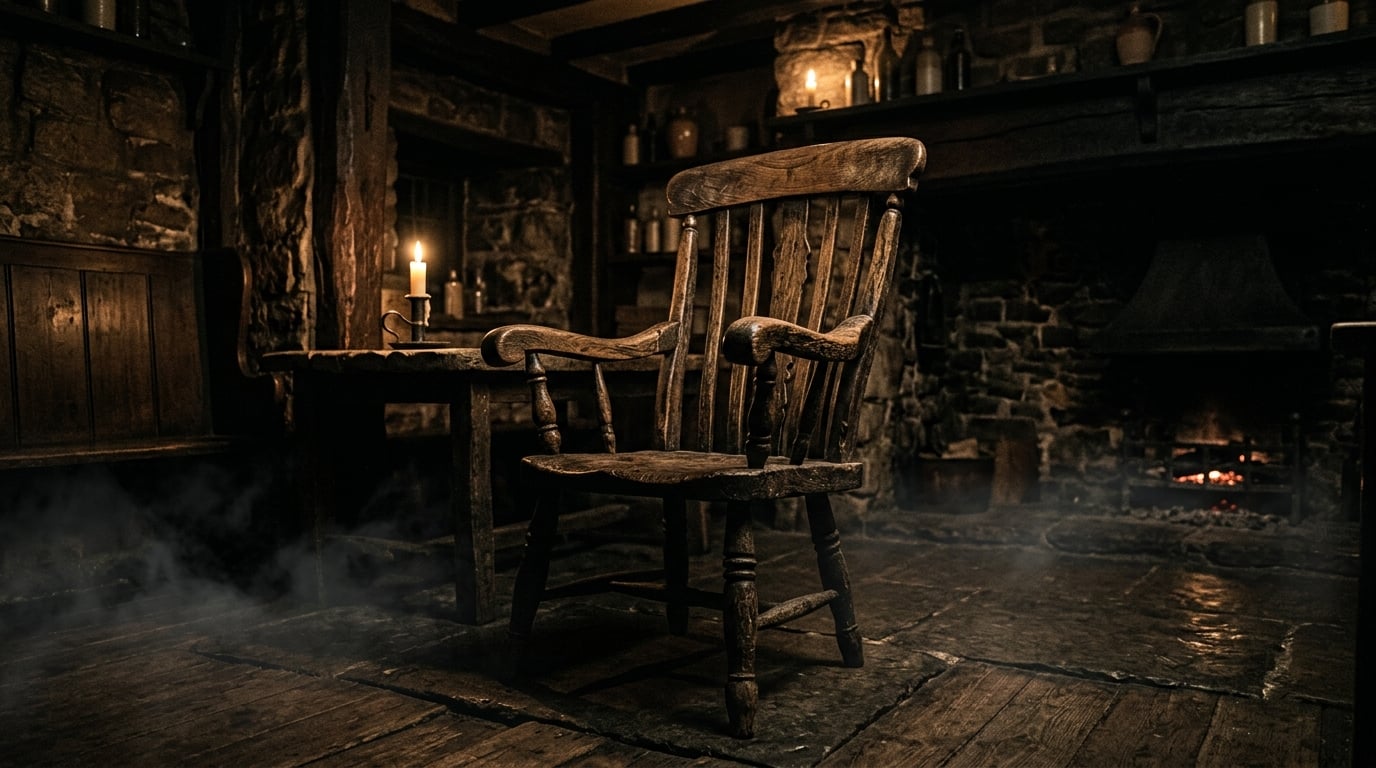
The Busby Stoop Chair: The Cursed Seat That Killed Everyone Who Sat In It
In the summer of 1702, Thomas Busby was hanged for murder in Thirsk, North Yorkshire. His crime: killing his father-in-law, Daniel Awety, in a drunken rage after finding the older man sitting in his favorite chair at a local inn. According to legend, as Busby was led to the gallows, he cursed that chair—declaring that anyone who dared sit in it after his death would meet a swift and terrible end.
For the next 270 years, that curse appeared to hold.
I've spent years analyzing patterns in intelligence work—separating signal from noise, coincidence from causation. The Busby Stoop Chair presents a case study in how folklore, confirmation bias, and selective memory can construct a narrative so compelling that an entire community begins to police it. But beneath the superstition lies a trail of documented deaths that, even for a skeptic, demands closer examination.
The Murder and the Curse
Thomas Busby ran a counterfeiting operation from a farmhouse near the village of Kirby Wiske. His father-in-law, Daniel Awety, was his partner in crime. On the day of the murder, Awety made the mistake of sitting in Busby's chair at the inn now known as the Busby Stoop Inn. The argument escalated. That night, Busby followed Awety home and bludgeoned him to death with a hammer.
Busby was arrested, tried, and sentenced to hang. His body was gibbeted—displayed in an iron cage near the scene of the crime as a warning to others. The chair remained at the inn, and the curse, whether uttered in earnest or invented later, became part of local lore.
What makes this case unusual is not the curse itself, but the meticulous record-keeping that followed. The inn's landlords, and later the museum that acquired the chair, kept logs of those who sat in it—and what happened to them afterward.
The Death Toll Begins
The first widely reported death came during World War II. A group of airmen from a nearby Royal Air Force base frequented the Busby Stoop Inn. On several occasions, young pilots sat in the chair as a dare. According to the inn's records and local newspaper accounts, several of these men died in crashes or combat shortly afterward.
In 1967, two Royal Air Force pilots sat in the chair during a visit to the pub. Both died in a car accident later that day when their vehicle veered off the road.
In 1970, a mason working on renovations at the inn sat in the chair during his lunch break. He fell to his death from a roof that same afternoon.
A year later, a roofer sat in it. He died after falling through a roof.
In 1972, a delivery driver sat in the chair while making a drop-off at the pub. His truck crashed into a tree hours later, killing him instantly.
The pattern was consistent enough that locals began to avoid the chair entirely. Visitors, however—especially those unfamiliar with the legend—continued to sit in it, often on a dare or out of ignorance.
The Museum Intervenes
By 1978, the landlord of the Busby Stoop Inn, Tony Earnshaw, had seen enough. He donated the chair to the Thirsk Museum with one condition: it must never be sat in again.
The museum agreed. The chair was mounted on a wall, five feet off the ground, ensuring no one could casually sit in it. A placard explained its history and the curse. Museum staff took the precaution seriously—not necessarily because they believed in curses, but because the pattern of deaths had become undeniable, and the liability unacceptable.
Since 1978, no one has sat in the Busby Stoop Chair. And since 1978, no further deaths have been attributed to it.
The Analytical Breakdown
From an intelligence perspective, this case presents several layers worth dissecting:
- Confirmation Bias: Once a narrative is established, people notice events that confirm it and ignore those that don't. How many people sat in the chair and lived long, uneventful lives? The records don't say.
- Selective Reporting: Deaths following the chair-sitting were documented; mundane outcomes were not. This creates a skewed dataset.
- Temporal Proximity: Many of the deaths occurred within hours or days of sitting in the chair, which strengthens the perceived connection. But in a population of young military personnel during wartime, or tradesmen working dangerous jobs, the baseline mortality rate was already elevated.
- Self-Fulfilling Prophecy: Did belief in the curse cause behavioral changes—recklessness, distraction, anxiety—that increased accident risk? Psychological stress is a documented factor in decision-making and motor control.
Yet the specificity of some incidents is difficult to dismiss. The two RAF pilots dying in a car crash the same day they sat in the chair. The roofer and mason both falling to their deaths within a year of each other, both having sat in the chair during work breaks. These are not vague misfortunes—they are acute, violent, and temporally clustered.
The Chair Today
The Busby Stoop Chair remains on display at the Thirsk Museum, bolted to the wall, untouched. Visitors photograph it. Some laugh. Others keep their distance.
The museum's decision to suspend the chair was pragmatic, not superstitious. Whether the curse was real or the deaths coincidental, the outcome was the same: people were dying, and the chair was the common variable. Removing that variable stopped the pattern.
In intelligence work, we call this risk mitigation. You don't need to believe in a threat to neutralize it. You just need to recognize the pattern and act.
Conclusion
The Busby Stoop Chair is either one of the most well-documented cursed objects in history or a masterclass in how folklore and selective memory can construct causality from coincidence. The deaths are real. The chair is real. The curse—whether supernatural or psychological—produced measurable outcomes.
What I know for certain is this: since the chair was taken off the floor, the deaths stopped. Whether that's because the curse was broken, the pattern was interrupted, or the sample size finally regressed to the mean, I'll leave to you.
But I wouldn't sit in it.