The Hinterkaifeck Murders: Germany's Most Haunting Unsolved Crime
In my years analyzing intelligence patterns at the CIA, I learned that the most disturbing cases are often those where the evidence points in every direction—and nowhere at all. The Hinterkaifeck murders of 1922 represent exactly this kind of nightmare scenario: a crime so methodically executed, yet so inexplicably bizarre, that it has haunted investigators for over a century.
The Farmstead in the Forest
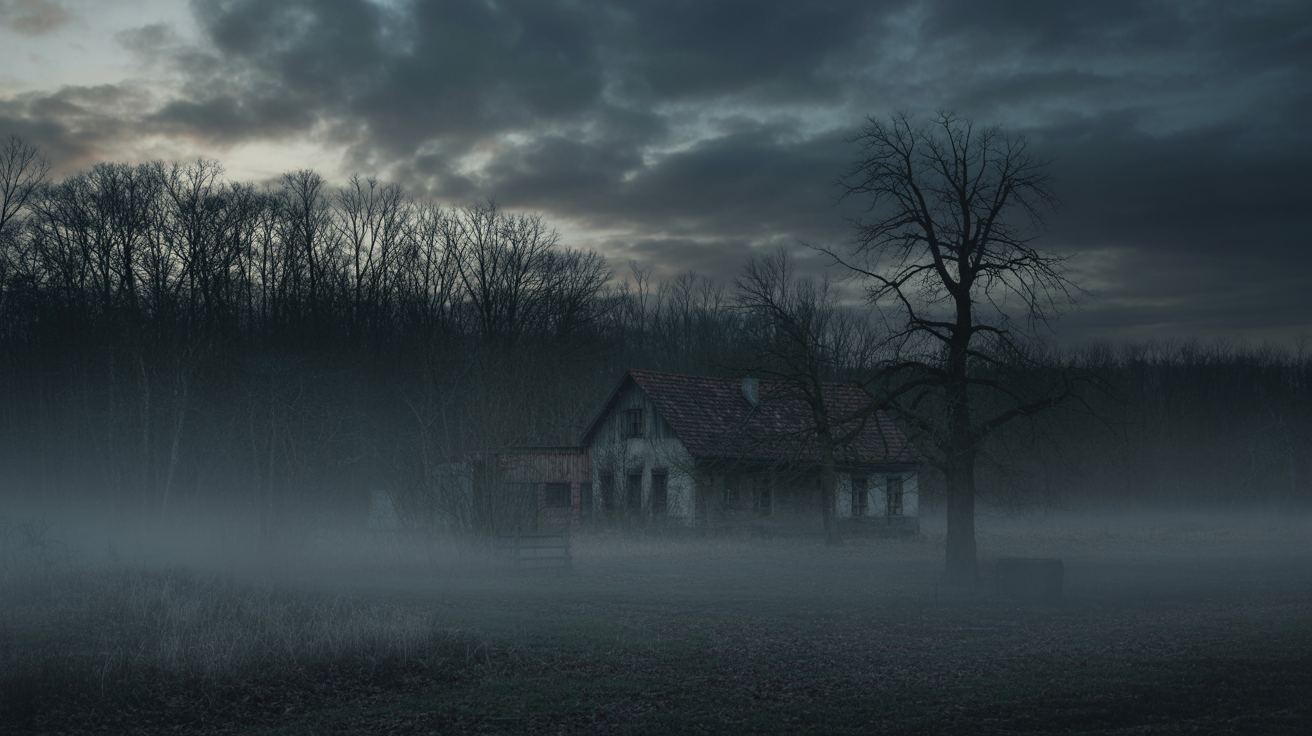
Hinterkaifeck was a small farmstead located between the Bavarian towns of Ingolstadt and Schrobenhausen, about 70 kilometers north of Munich. The name itself means "behind Kaifeck," referring to its isolated position beyond the nearest hamlet. In March 1922, it was home to the Gruber family: Andreas Gruber (63), his wife Cäzilia (72), their widowed daughter Viktoria Gabriel (35), and Viktoria's children—Cäzilia (7) and Josef (2). A new maid, Maria Baumgartner, had arrived just hours before the murders, replacing the previous maid who had fled the farm claiming it was haunted.
On the evening of March 31, 1922, all six were murdered with a mattock—a farming tool similar to a pickaxe. Their bodies wouldn't be discovered until April 4, when neighbors noticed that young Cäzilia hadn't attended school for several days and smoke had stopped rising from the farmhouse chimney.
The Disturbing Evidence
What makes Hinterkaifeck particularly chilling isn't just the brutality of the murders—it's the evidence suggesting the killer remained on the property for days afterward. Andreas Gruber had reported strange occurrences in the days before the murders: footprints in the snow leading from the forest to the farm, but none leading back. He heard footsteps in the attic. A newspaper appeared on the farm that no one had purchased. The house keys went missing.
When investigators arrived, they found that someone had fed the livestock, eaten food from the kitchen, and lit fires in the house—all after the estimated time of death. The neighbors had seen smoke from the chimney on April 1 and 2, meaning someone was living in the house while six corpses lay in the barn and house.
The Crime Scene Analysis
The forensic evidence painted a methodical picture. Andreas, Cäzilia (the elder), Viktoria, and young Cäzilia were lured to the barn one by one and struck down with the mattock. The killer then entered the house and murdered two-year-old Josef in his crib and the maid Maria in her bedroom. Young Cäzilia had survived the initial attack—investigators found clumps of her hair torn out, suggesting she had lain in the barn for hours, perhaps pulling at her own hair in pain, before dying.
The murder weapon was found at the scene. There was no sign of forced entry. Nothing of significant value was stolen, though some money was missing. The methodical nature of the killings suggested someone familiar with the family's routines.
Theories and Suspects
Over 100 people were interviewed. The suspect list was extensive:
Lorenz Schlittenbauer, a neighbor and former lover of Viktoria, was considered the prime suspect. He had fathered Viktoria's son Josef (her husband had died in World War I). Schlittenbauer's behavior at the crime scene was suspicious—he immediately went to the barn and moved hay bales, potentially contaminating evidence. He claimed to be searching for survivors, but some believed he was looking for incriminating evidence.
Viktoria's husband was officially dead, killed in the war. However, rumors persisted that he had survived and returned to exact revenge, possibly for Viktoria's affair with Schlittenbauer. No evidence ever substantiated this theory.
A drifter or vagrant could have been living in the forest, using the attic for shelter, and killed the family when discovered. This would explain the footprints and attic sounds. However, it doesn't explain the intimate knowledge of the family's routines or why the killer remained afterward.
Andreas Gruber himself was rumored to have had an incestuous relationship with his daughter Viktoria—some speculated Josef was actually Andreas's son. Could someone have been exacting justice? Or could there have been a family conflict that turned deadly?
The Investigation's Limitations
The investigation was hampered by the era's forensic limitations. The bodies were decapitated post-mortem and the heads sent to Munich for examination using a new technique called "clairvoyance"—essentially, investigators hoped a psychic could extract information from the skulls. Predictably, this yielded nothing. The heads were never returned to the bodies and were lost, possibly destroyed during World War II.
The farm itself was demolished in 1923. The site is now a meadow, marked only by a small memorial.
Modern Analysis
From an intelligence perspective, several elements stand out. The killer demonstrated operational security: arriving undetected, maintaining surveillance (the footprints, the attic presence), executing the plan methodically, and remaining at the scene to establish normalcy (feeding animals, lighting fires). This suggests either military training or intimate familiarity with the location.
The fact that the killer stayed afterward is particularly significant. This wasn't panic or impulse—it was calculated. Either the killer was searching for something specific, or they were establishing an alibi by making it appear the family was still alive.
The missing house keys suggest premeditation. The killer may have taken them during an earlier visit, allowing silent entry on the night of the murders.
The Enduring Mystery
In 2007, students from the Fürstenfeldbruck Police Academy reviewed the case using modern forensic techniques. They concluded that Lorenz Schlittenbauer remained the most likely suspect, but the evidence was circumstantial at best. Without DNA evidence, witness testimony, or a confession, the case remains officially unsolved.
What haunts me about Hinterkaifeck isn't just the brutality—it's the cold calculation. Someone planned this carefully, executed it methodically, and then lived among the dead for days. In my experience, that level of psychological detachment suggests either profound mental illness or professional training. Perhaps both.
The Hinterkaifeck murders remind us that some mysteries resist solution not because the evidence is absent, but because it points in too many directions. A century later, six people still await justice, and somewhere in the Bavarian countryside, a meadow marks the spot where one of history's most disturbing crimes unfolded—and where, for several days, a killer lived among the dead.
🔪 Video: Hinterkaifeck Murders Germany Unsolved
A Knight Phenomena Investigation