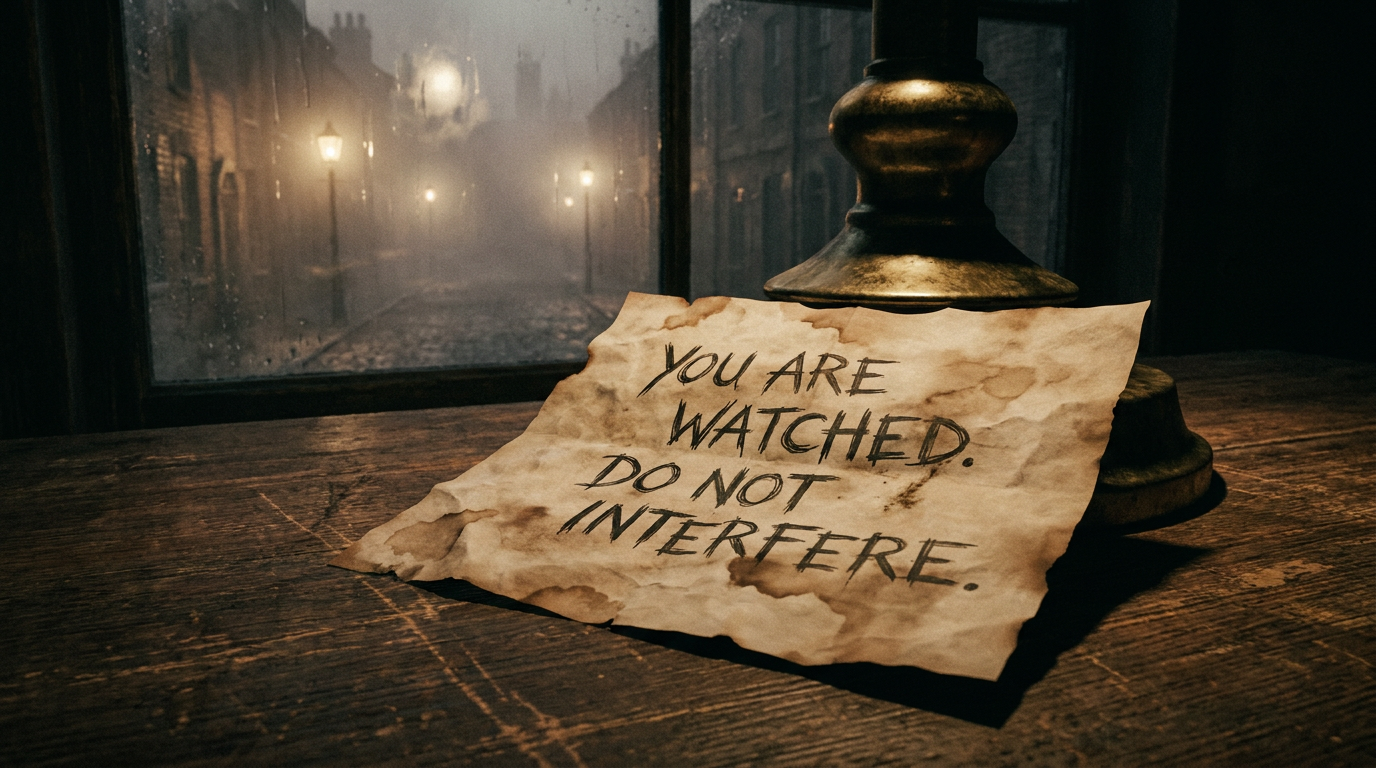
The Circleville Letters: Anonymous Threats That Turned an Ohio Town Into a Trap
A Town Receives a Letter It Cannot Ignore
In the spring of 1977, residents of Circleville, Ohio, began receiving letters that were equal parts accusation and intimidation. They were unsigned, typed or handwritten in a plain, almost workmanlike style, and they carried details that suggested the sender knew far too much about local marriages, affairs, and private disputes. The first targets were ordinary people with ordinary lives. Then the letters widened their reach. They began to shape behavior, inflame suspicion, and draw an entire community into a slow-moving psychological siege.
What became known as the Circleville letters is one of those cases that resists clean explanation precisely because it sits at the intersection of gossip, surveillance, and fear. There are no glowing objects in the sky, no spectral witnesses, no impossible footprints in the snow. Instead, there is something in many ways more unsettling: a human intelligence using secrecy as a weapon.
The facts, as documented over the years, are stubborn. The letters arrived over a long period. The allegations were often specific. Some pointed to affairs. Some threatened violence. One family in particular became the center of the storm. And somewhere in the background sat the suspicion that the person writing the letters was not a stranger at all, but someone from inside the community.
The Anatomy of a Harassment Campaign
The early letters did not read like random harassment. They read like targeted pressure. The writer appeared to know routines, relationships, and small-town tensions that outsiders would not easily guess. That is important, because in cases like this the content often tells investigators more than the envelope. A true outsider tends to fling broad insults. A local tends to know where the soft tissue is.
The letters eventually escalated from moral accusations to darker threats. They implied that if certain people did not change course, consequences would follow. In a town like Circleville, where reputation could be as powerful as law, that kind of message lands with force. A threat does not need to be explicit if the recipient already understands the local code.
Authorities investigated. Residents speculated. Names circulated. But the case never produced a definitive public resolution. That ambiguity became its own fuel. Once a town believes an anonymous writer is among them, every neighbor becomes a possible suspect, and every silence starts to feel loaded.
In small communities, anonymity is not just concealment. It is a form of theater. The writer is invisible, but the audience is very real.
Why Circleville Was Vulnerable
To understand why this case took root, you have to understand the environment. Small towns do not generate mystery in the same way metropolitan centers do. They generate it through compression. Everybody knows everyone else’s business, but no one has the whole story. A rumor can move faster than evidence. A family dispute can become civic knowledge by the end of the week.
Circleville in the late 1970s was not unique in that respect. What made it unusual was the persistence of the campaign and the degree to which the letters appeared to anticipate private reactions. That created a feedback loop. The letters triggered defensive behavior, which generated more suspicion, which then seemed to validate the letters themselves.
That dynamic matters. Harassment cases are often less about what the sender says than what the targets begin to do in response. The threat becomes an organizer of reality. People change routes, conceal conversations, monitor one another, and in doing so create the very atmosphere of secrecy that the anonymous writer wants.
The Central Mystery: Who Was Doing This?
Over the years, theories converged around a few possibilities. The most obvious was that the letters were written by someone with intimate knowledge of the people involved, perhaps someone angry over an affair or a family grievance. That would explain the personal tone and the precision of some allegations. Another theory held that multiple people may have been involved at different stages, which could account for changes in style or emphasis.
There was also the possibility of a single manipulative personality who understood how to stir distrust without ever needing to confess the whole design. In that model, the writer did not need supernatural insight. He or she only needed patience, local knowledge, and a willingness to exploit human weakness.
Law enforcement at one point focused on a suspect who died in a suspicious manner after a confrontation involving one of the letters. That death deepened the mythology around the case, but it did not end it. If anything, it complicated it further. Once a suspect dies, the public often upgrades speculation into certainty. History then hardens around what feels plausible, even when the evidentiary record remains incomplete.
What the Evidence Suggests — and What It Does Not
This is where a skeptical approach is essential. Cases like Circleville attract dramatic theories because the human mind dislikes unfinished narratives. But not every enduring mystery hides a grand design. Sometimes the simplest explanation is also the most unsettling: a person or persons weaponized private knowledge to terrorize a town.
At the same time, the evidence does not permit a clean closure. The letters were real. The fear was real. The social damage was real. But the full identity of the writer, the mechanism by which the information was gathered, and the exact motives behind the campaign remain contested. That is enough to keep the case alive.
What makes Circleville compelling is not that it demands paranormal explanation. It is that it reveals how ordinary human behavior can become indistinguishable from a haunting when the source remains hidden.
The Broader Pattern: Anonymity as Power
Anonymous letters have a long history in American crime and folklore because they exploit a basic vulnerability. We are social creatures. We trust names, faces, and accountable speech. Remove those, and the message acquires a ghostly quality. It arrives from nowhere, yet it knows where we live.
In that sense, the Circleville case is a study in negative space. The writer is defined by absence, but the effects are concrete: fractured relationships, public suspicion, and a community reorganized around dread. There is no need for a supernatural cause to create an atmosphere that feels supernatural.
- Anonymous communications can magnify existing tensions more effectively than direct confrontation.
- Small communities are especially vulnerable because everyone already has context, grievances, and assumptions.
- Once fear takes hold, even mundane details can appear sinister.
Why the Case Still Matters
Decades later, the Circleville letters remain unsettling because they expose something durable about human psychology. Mystery is often less about the unknown than about the known that we cannot comfortably admit. Affairs, jealousy, resentment, and control are not paranormal forces, but they can produce outcomes that feel as disturbing as any haunting.
The case also reminds us that some of the most effective intimidation requires no elaborate conspiracy. A handful of letters, timed well and written with enough local knowledge, can destabilize a household and implicate an entire town. That is the real nightmare: not a monster in the dark, but a mind that understands exactly where to press.
Circleville never became famous for a spectacular reveal. It became infamous for the opposite. The letters outlived the certainty around them. They left behind a record of fear without a final author. And in the absence of that author, the town itself became part of the mystery.
That may be the most honest conclusion available. Not every unresolved case ends with a hidden mastermind or an impossible explanation. Sometimes the truth is narrower and more human. Sometimes the horror lies in how easily one person, protected by anonymity, can turn a community into an echo chamber of suspicion.
Circleville is still a mystery. But it is also a warning.
✉️ Video: Circleville Letters Anonymous Threats
A Knight Phenomena Investigation