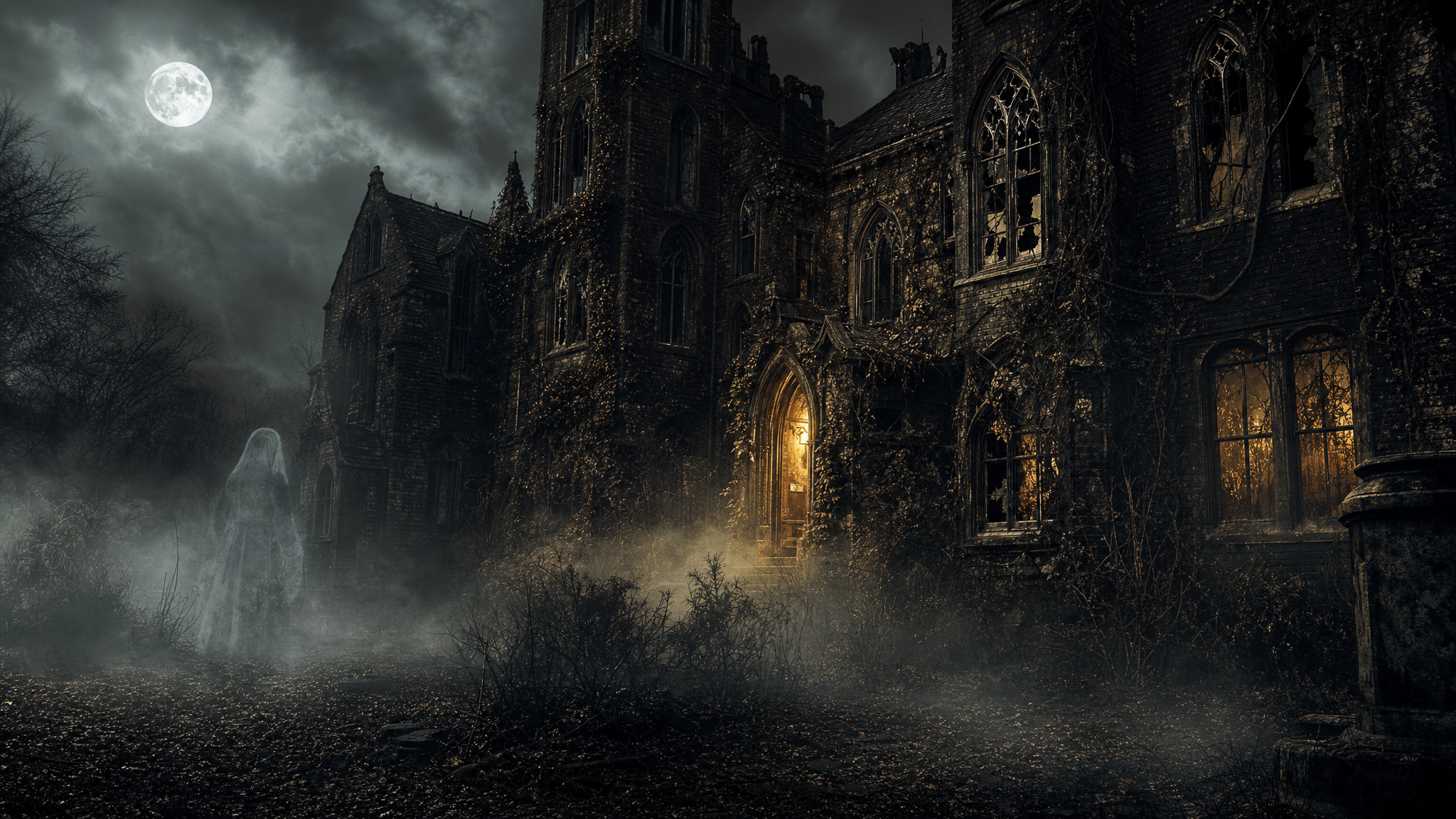
Borley Rectory: England’s Most Haunted House—or the Perfect Case Study in Myth-Making?
Some cases arrive with a trail of hard evidence. Others arrive wrapped in reputation, and the reputation is the problem. Borley Rectory, in the parish of Borley near Sudbury on the Essex-Suffolk border, belongs to the second category. By the time the house burned in 1939 and was later demolished, it had already become a fixed point in British paranormal lore. People did not merely say it was haunted. They said it was the most haunted house in England.
That claim has survived for decades, but my experience in intelligence work taught me to ask a different question first: what, exactly, is documented—and what was added later? Borley is a good case study because the story is not empty. There are witnesses, dates, names, and a long chain of reports. Yet the further back you push on the chain, the more it bends under the weight of folklore, selective memory, and sensational retelling.
The House and the Setting
The rectory most people mean when they say "Borley Rectory" was built in 1863 for the Reverend Henry Dawson Ellis Bull, who served as rector of Borley. The location matters. It was a secluded, rambling Victorian building in rural Essex, surrounded by fields and lanes that could easily become uncanny after dark. Isolation does not create ghosts, but it does create conditions where ordinary sounds become meaningful and ambiguous events acquire stories.
Even before the most famous investigations, local tradition attached old folklore to the site. One enduring tale says a nun from a nearby convent was in love with a monk, was caught trying to flee, and was walled up alive or otherwise met a violent end. The story is compelling because it fits the architecture of a haunting: forbidden love, punishment, and a restless spirit returning to the place of death. The issue is that compelling stories are not the same thing as verified history.
The Bull Family Reports
The earliest widely repeated Borley accounts come from the Bull family in the late nineteenth century. The rector’s daughters reportedly saw the apparition of a nun in the grounds. Other accounts described unexplained footsteps, ringing bells, and the sense of a presence moving through the house. One daughter, according to later retellings, claimed to have seen a coach or hear the sound of wheels passing outside at night.
These are not trivial details. In any case involving recurring perceptions, patterns matter more than single events. Multiple family members reporting similar experiences can suggest something objective is occurring. It can also suggest that one person’s interpretation is influencing another’s. Families do this without realizing it. A house begins to acquire a personality, and once that happens, every creak has a script.
What is missing from the early Borley record is the kind of independent corroboration that would make a skeptic sit up. There is no strong chain of contemporaneous police reports, engineering inspections, or outside observers documenting a specific phenomenon as it happened. That does not prove nothing occurred. It does, however, limit what can be responsibly claimed.
Harry Price Enters the Picture
The story truly exploded in the 1920s and 1930s, when the English psychic researcher Harry Price became involved. Price was not a gullible amateur. He was meticulous, media-savvy, and perfectly aware that a paranormal case lives or dies on documentation. In 1929 and 1930, he investigated Borley with the seriousness of a field operation. He interviewed witnesses, inspected the house, collected reports, and published the results in a way that made the site famous far beyond the village.
Price’s book, The Most Haunted House in England, gave Borley a permanent identity. After that, every knocking sound, every unexplained mark, every anecdote from a former resident seemed to confirm the legend. But Price also became controversial. Critics later argued that he was too willing to embrace material that supported the haunting and too slow to distinguish between firsthand observation and secondhand story. Some of the most dramatic Borley details came from testimony that was difficult to verify independently.
There is also the matter of human behavior inside a supposedly haunted building. Once a property acquires a reputation, people begin watching it differently. They look for anomalies. They hear noises in a new key. They may even unconsciously create the conditions for a mystery by expecting one. In intelligence analysis, this is not a fringe problem. It is the everyday danger of confirmation bias.
The Foyster Years: The Most Famous Haunting Phase
The best-known period of activity came after Reverend Guy and Marianne Lethbridge Foyster moved into Borley Rectory in 1928. This is where the case becomes truly interesting, because the reports multiplied and became more specific. Objects were said to be thrown. Bells rang without cause. Footsteps crossed corridors. Messages reportedly appeared on walls. The phrase "Marianne, please help" is associated with this phase of the case in later accounts, and the story of a ghostly nun became more elaborate with each retelling.
From an investigative standpoint, the Foyster years are the fulcrum of the whole case. If Borley was genuinely active, this is where the evidence should have become strongest. Instead, the record becomes a mixture of witness statements, media amplification, and later interpretations. The phenomenon seems to expand at the same rate as the public attention surrounding it.
That does not make the Foyster reports meaningless. It means they must be handled carefully. A family under stress in a conspicuous house, with visitors coming and going and a press eager for the sensational, is not an ideal laboratory. It is a generator of anecdotes. Some may be authentic experiences. Some may be misunderstandings. Some may be stories that hardened because they were repeated too often to die.
The Fire of 1939 and the Birth of a Legend
Borley Rectory was destroyed by fire on 27 February 1939. The building was then demolished, leaving only the trace of a place that had already become larger than itself. Fires are catastrophic in practical terms, but for a haunting they are strangely useful. They create a dramatic ending and a clean stage for memory. Once the house was gone, all that remained was testimony.
That matters because haunted-house cases often intensify after the physical site disappears. The location can no longer be tested easily, and the narrative becomes untethered from material reality. Borley entered this phase almost immediately. It became a symbol, not just a house. The story was no longer about a structure on a lane in Essex. It was about whether the dead can leave marks on the living world.
What the Evidence Suggests—and What It Does Not
After reviewing the case as a whole, I come away with a position that may frustrate both believers and debunkers. I do not think Borley is best explained as a simple fraud. Too many people over too long a period reported too many similar impressions to dismiss the entire case as invention. But I also do not think the record supports the confident claim that Borley demonstrated a proven supernatural force.
What seems most plausible is a layered explanation:
- an isolated house with an eerie reputation;
- local folklore that supplied a ready-made ghost story;
- recurring ambiguous experiences interpreted through expectation;
- family and guest testimony amplified by repetition;
- and a charismatic investigator whose publication turned scattered reports into a national legend.
In other words, Borley may not be a story of one undeniable ghost. It may be a story about how hauntings are assembled.
The Criticisms of the Case
Later researchers raised hard questions about the reliability of some Borley material, including whether certain dramatic incidents were accurately recalled or embellished after the fact. That criticism is not unique to Borley. Many famous paranormal cases share the same weakness: the oldest claims are the least verifiable, and the strongest emotional testimony often arrives after the story has already become famous.
As an analyst, I also pay attention to incentives. A haunted house can attract attention, visitors, publications, and prestige. That does not mean witnesses are lying. It means the environment rewards dramatic narrative. Once that dynamic takes hold, the case starts producing the kind of evidence people expect to find.
In the Borley record, the problem is not that there is nothing there. The problem is that almost everything there is human: memory, fear, suggestion, rivalry, publicity, and interpretation.
Final Assessment
If you ask me whether Borley Rectory was haunted, I will give you the same answer I would give on any ambiguous file: the available evidence does not permit certainty. If you ask whether people genuinely experienced something they could not explain, I would say yes, that seems likely. If you ask whether that something was a ghost nun walking the grounds of an Essex rectory, the answer is far less secure.
Borley Rectory remains important not because it proves the paranormal, but because it shows how a mystery can become institutionalized. A house can absorb local folklore, witness memory, press attention, and investigative zeal until it becomes more famous than any fact ever recorded about it. That, in its own way, is a haunting.
And perhaps that is the real lesson. Sometimes the ghost is not in the hallway. Sometimes the ghost is the story itself, moving from mouth to mouth, year to year, long after the house has turned to ash.